

South America
Empowering a continent of opportunity and growth
The Working Group South America, exploring security, governance, and economic trends, analyses political stability, organised crime, and foreign influence in South America. It assesses regional defence cooperation, trade relations, and security threats. Monthly briefings offer fact-based analyses and visualisations on South America's evolving geopolitical role in international affairs.
Democratic backsliding in Latin America
Democratic backsliding in Latin America: erosion from within and the case of Argentina In modern politics, Latin America has often served as a perfect real-world laboratory for studying major political changes. The “Third Wave” of democratization, which swept the region during the late twentieth …
One model, distinct results
Title: One model, distinct results: Why is Bukele model failing in Ecuador On the 7th of January, guards at La Regional prison in the port city of Guayaquil found the cell of crime boss Adolfo ‘Fito’ Macías empty. In response, Ecuadorian president, Daniel Noboa, then in office for just two…
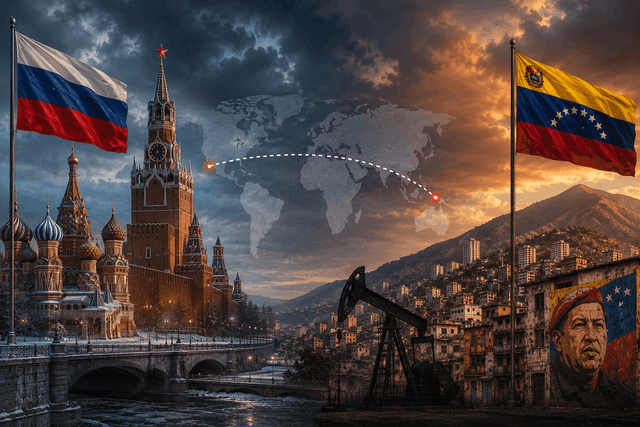
From Moscow to Caracas
In an era of rapidly developing social media, cyber threats such as manipulation, fake news, and disinformation are also expanding as elements of planned psychological and information campaigns—tools of hybrid warfare used to build influence and sustain autocratic power. The article describes coo…

Who Speaks for Mercosur?
Main question: Who gets to speak for Mercosur in the EU–Mercosur deal? Argument: In Brazil and Argentina, the deal is filtered through elite mediation, not neutral state interest. Agribusiness, export coalitions and investor-confidence politics shape how integration is framed. Conclusion: The agr…
A Promise Made Too Soon:
After capturing Maduro, the White House made one thing clear: They aim to revive the Venezuelan oil industry. Though an exciting project to some, it might just be too challenging for many others. Even though Venezuela is extremely oil-rich, internal and external factors might just showcase it as …
El Super Tazón: Bad Bunny’s Soft Power Moment
The briefing assesses how Bad Bunny’s 2026 Super Bowl performance operates as an intervention in hemispheric power relations. It contends that his deployment of Spanish language, decolonial aesthetics and pan‑Latino symbolism constitutes a form of counter‑hegemonic soft power. It concludes that t…
The Conditional Power of Non-Kinetic Warfare
To what extent did Operation Absolute Resolve demonstrate a scalable model for bypassing sophisticated A2/AD systems through multi-domain non-kinetic fires? The paper argues that tightly integrated cyber and electronic warfare can generate short-term access in permissive or weakly networked defen…
Humanitarian Aid under Pressure
The 11th Humanitarian Symposium Munich was devoted to the topic “Humanitarian aid in the light of the current geopolitical situation”. Accordingly, the agenda was filled with a series of experts from the field, which allowed us to draw conclusions about the recent geopolitical impacts on humanita…
After Maduro’s Ouster: Transition or Recast?
Main Question: Is Venezuela heading toward a democratic transition or a market-authoritarian reconfiguration after Maduro’s ouster? Argument: Early changes show a fast economic opening (especially in oil) under U.S. licensing and revenue controls, while political guarantees lag amid emergency gov…
Bolivia’s Environmental Policy Since Evo Morales
Is it possible for Bolivia to promote an environmental-forward political agenda while reproducing the structures of a neoliberal-capitalisit world system? Bolivia’s reliance on neo-extractivism to fund social programs reproduced dependency, highlighting contradictions between indigenous worldview…
South America’s Turn to the Right
Is South America’s shift to the right ideological or cyclical? Voters have turned to right-wing leaders mainly because of economic problems, crime, and frustration with prolonged left-wing governments. Hence, the shift is a short-term, corrective reaction rather than ideological in nature.
COP30: Europe Under Pressure Without the US
MQ: How has Europe navigated COP30’s climate negotiations and energy transition amid the US absence? MA: With the US absent, Europe took center stage, balancing climate ambition with strategic, geopolitical, and energy constraints; youth engagement added perspective but could not replace careful …
Indigenous Rights at COP30 in Brazil
To what extent does COP30 take into account the rights and participation of Indigenous people affected by climate change in Brazil? Whilst COP30 improved Indigenous participation and brought some positive actions, it failed to establish significant protections for Indigenous rights. More must be …
The Transnational Engine of Tren de Aragua
RQ: How did Tren de Aragua use Venezuela’s crisis and migrant routes to move from a prison gang to a transnational network? Argument: Its expansion stems from the interaction of state fragility, mass displacement, and diversified criminal markets. Conclusion: TdA shows a new franchise-style, poly…
Petro’s Challenge: Decolonising R2P in Gaza
This brief examines how Colombian President Petro’s call for R2P intervention in Gaza challenges Western selective enforcement of humanitarian norms. It argues that Petro exposes how imperial powers control intervention based on geopolitical interests, not humanitarian need. Drawing on Latin Amer…
In the Eyes of Empire
– Why do Latin American elites keep courting foreign power—chasing recognition abroad while trading away sovereignty? – A fantasy of imperial recognition—embedded in an external legibility regime—rewards mimicry and validation abroad over democratic legitimation at home. – Break the spell—travers…
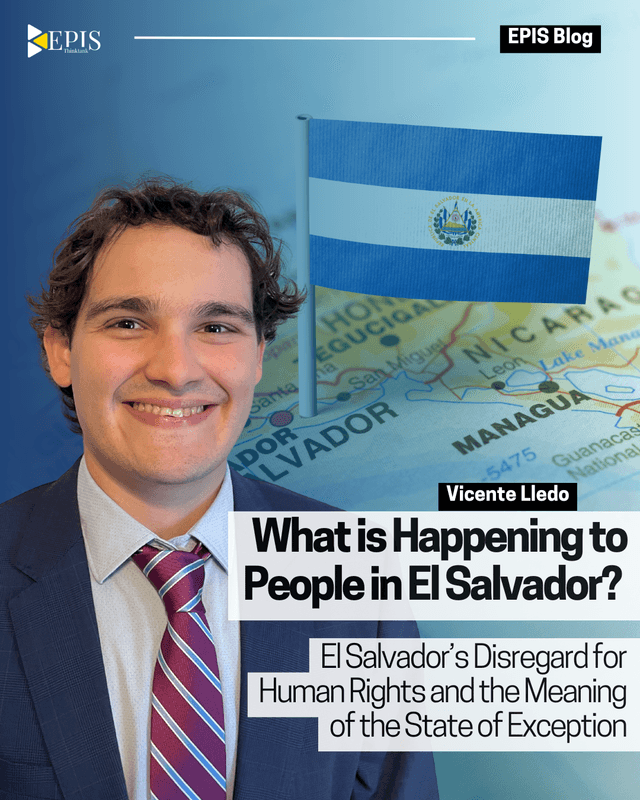
What is Happening to People in El Salvador?
Can El Salvador’s state of exception, declared to combat gang violence, justify suspending constitutional rights and widespread human rights abuses? While the government claims improved security, the emergency has led to arbitrary detentions, disappearances, torture, and overcrowded prisons under…
Critical Raw Materials in Argentina and Brazil
Main Question: How do Argentina and Brazil balance climate rhetoric with mining policy on critical raw materials? Argument: Despite opposite discourses (Lula’s pro-environment stance vs. Milei’s climate skepticism) both prioritize mining expansion over sustainability. Conclusion: Ideology matters…
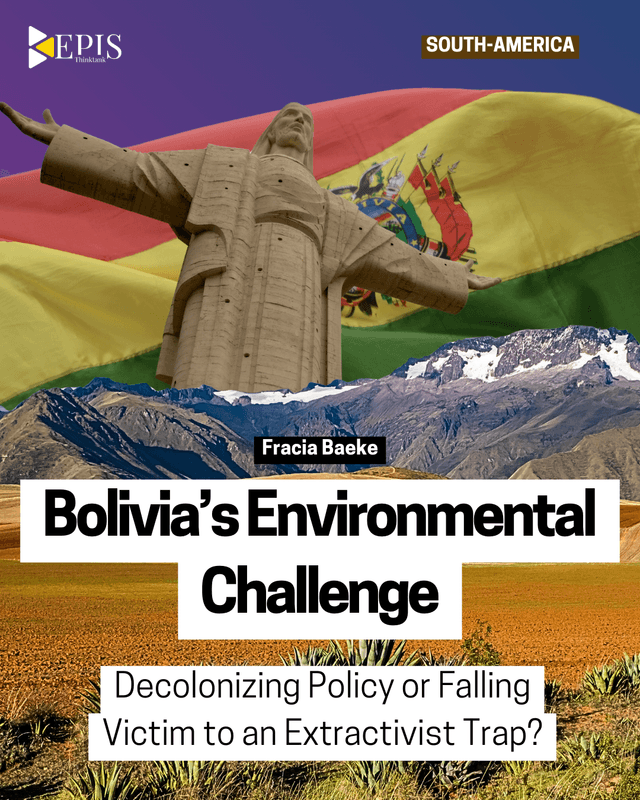
Bolivia’s Environmental Challenge
– Will it ever be possible for Bolivia to promote an environmental-forward political agenda while reproducing the structures of a neoliberal-capitalisit world system? – Indigenous principles and worldviews prioritising harmony with nature were centered in Morales’ political agenda, proving to be …
Latin America
How can Latin America achieve true strategic autonomy amid U.S. retreat and authoritarian advances? The article argues that multipolarity alone does not guarantee emancipation; dependency risks are merely shifting forms. Conclusion: Latin America must ground its foreign policy in democratic plura…