

Middle East & North Africa
Fostering resilience in a region of transformation
The Working Group Middle East & North Africa, covering conflicts, energy security, and political stability, analyses regional power struggles, military dynamics, and economic resilience in MENA. It assesses the influence of external actors, counterterrorism, and humanitarian challenges. Monthly briefings offer data-driven insights and visualisations on the evolving geopolitical landscape and security dynamics of the region.
Surviving the Spring
Show moreShow lessMain question: How did Egypt’s regime survive the 2011 uprising and re-emerge stronger? Argument: It did so through “compound authoritarianism” — the interaction of institutional entrenchment (military control), economic co-optation (rentier dynamics), and calibrated repression.…

The Paradox of Tunisia’s Arab Spring
The Jasmine Revolution showed that lasting democracy depends not only on constitutional reform but also on strong institutions, accountability, and socioeconomic progress.
The IDSF on security challenges in the Middle East
According to IDSF, Israel’s security relies on national resilience, technological innovation, and regional partnerships, while deradicalization remains essential for long-term Middle East stability.

The Arab Springs in Yemen : A stolen revolution
This article examines how external intervention in the Yemeni revolution contributed to one of the most severe humanitarian crises of our time. By prioritizing foreign interests over those of the local population, the Gulf Cooperation Initiative neglected the urgent needs of Yemeni society, drivi…
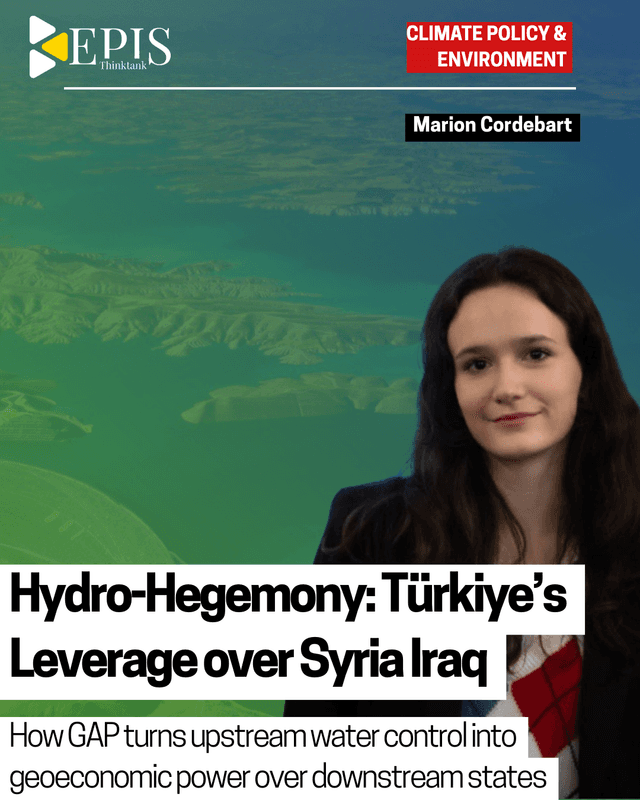
Hydro-Hegemony: Türkiye’s Leverage over Syria Iraq
How does Türkiye’s Southeastern Anatolia Project (GAP) transform upstream water control into geoeconomic leverage over Syria and Iraq? This article argues that expanded hydropower and irrigation infrastructure convert hydrological dominance into domestic economic gains, producing asymmetric inter…
Iranian Resistence between Opression and War:
1. Sanaie links her family’s persecution to support for the NCRI and its vision of a secular democratic Iran. 2. She says protests are driven by repression, economic crisis, and violent state crackdowns. 3. Sanaie rejects foreign intervention and monarchy restoration, arguing only organized inter…
Bahrain after the Arab Spring
This article asks why Bahrain’s Arab Spring uprising failed to produce democratic change. It argues that the monarchy survived through repression, opposition exclusion, sectarian framing, and regional Gulf backing. The conclusion is that Bahrain illustrates authoritarian reconsolidation: formal i…
The continued fight for democracy
the reoprt follows how different countries in the MENA region have been shaped by the arab spring, focussing on its effects on 1. the legal political systems 2. the socio-political impact 3. the role of regional/domestic and international human rights organisations – providing a comparative overv…
Morocco’s Dual Strategy of Control
Main question: Why has Morocco experienced renewed youth-led protest (GENZ212) more than a decade after the Arab Spring, despite formal political reform and institutional stability? Argument: Morocco’s post-2011 stability is the result of a dual process of top-down reforms and repression Conclusi…
The Ineffective Diplomacy of the Middle East War
This article explores the failures of current diplomacy of the Middle East War, arguing that the opportunistic use of mediation rather than genuine peace negotiations complicate any progress towards de-escalation substantially. It examines a string of diplomatic failures and reasons behind them, …
The Security Dilemma in post-Arab Spring Libya
How did the Arab Spring shape Libya’s long-term political fragmentation and insecurity? The 2011 uprising dismantled weak state institutions, triggering a security dilemma where militias and foreign actors filled the power vacuum, reinforcing division. Libya’s instability persists due to entrench…

The Gulf Cooperation Council Explained
Main question: Why do Gulf states cooperate within the GCC despite internal rivalries and regional instability? Argument: The GCC functions as a framework for security coordination, economic integration, and regime survival, driven by shared threats rather than deep unity. Conclusion: The GCC sho…
Supply Shock: Why is Gas so Expensive?
1) Why does a supply shock impact gas prices? 2) Changes to oil production capabilities affect the oil supply and its prices. 3) A supply shock creates short-term or long-term changes to oil supply and prices that affect consumer spending and activity.

Unfinished Revolutions
main question: how different mena questions developed post arab spring, how did this manifest politically and legally through out the region, what are major on-going/ recent/ past developments actively shaping the countries
Contesting Humanitarian Space
The contestation of humanitarian space in the Gaza Strip follows a lack of willingness from the international community to ensure the unobstructed provision of aid. The contestation of humanitarian space poses a serious question to the possibility of long-term conflict resolution in Gaza. The con…
Hormuz Crisis: Economic & Security Risks
-To what extent does the 2026 Hormuz blockade destabilize global economic and MENA security dynamics? -The disruption creates a systemic “endless loop” of energy shortages and 20% price hikes in Asia, sparking global industrial paralysis. Iran exploits this vulnerability through asymmetric tactic…
Egypt and the Nile
-Egypt has enjoyed a normative hegemony over the Nile’s waters since the period of British colonialism. -As riparian basin states seek to develop their hydrological development potential, this clashes with Egypts previously privileged position, especially regarding Ethiopia’s construction of the …
Iran in 2026
Main question: progress of doemtic unrest and war in Iran Arguemnts: domestic unrest less important for Iran compared to War Conclusion: situation needs to be observed as it progresses
Middle East Maritime Security & Geostrategy
Can conventional military deterrence and naval coalitions effectively neutralize asymmetric threats from non-state actors in fractured states like Yemen? While the U.S. prioritizes trade stability and Israel enforces direct deterrence, these kinetic responses address maritime symptoms rather tha…
Use of Aid After the 2023 Turkey–Syria Quake
– Was international aid provided after the Turkish–Syrian earthquake used appropriately? – Despite substantial funding, centralised administration in Turkey and authoritarian control in Syria led to political interference, weak oversight, and selective allocation, limiting effective distribution…