

Indo-Pacific
Biannual reports on strategic competition in the Indo-Pacific, ASEAN dynamics, China's regional posture, and maritime security.
Published biannually · Peer-reviewed
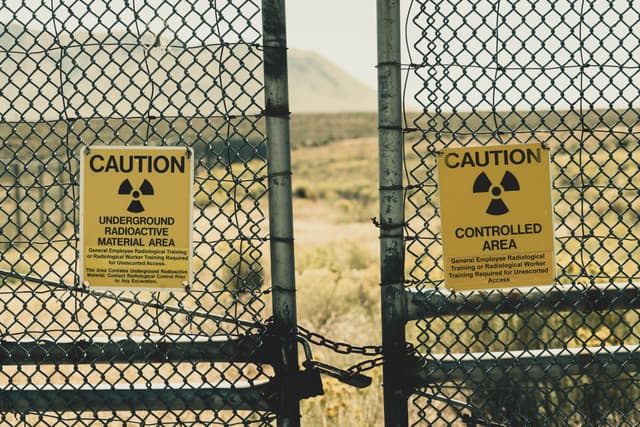
Escalation in the Dark
China’s nuclear expansion is increasing uncertainty around crisis decision-making, making deterrence less predictable and raising the risk of miscalculation, especially over Taiwan.
Fuel Crisis: Car dependence & Environmental Impact
Argument: How Australia’s car-dependent urban policy model and heavy reliance on imports for fuel expose Australian cities and the national economy to significant risks from global disruptions. This dependence is highlighted by the supply shocks in the Strait of Hormuz, significantly disrupting g…
The Weak Yen Trap
Q: Does Japan’s dollar exposure prevent the BoJ from raising rates? Arg: Low rates fuel carry trades that weaken the yen, while $1T+ in U.S. Treasuries ties Japan to U.S. monetary cycles — a self-reinforcing trap. Concl: Gradual normalisation is the best exit, but political pressures keep the sta…
Taiwan’s Porcupine Strategy
To what extent does Taiwan’s defence production and external security cooperation enhance the effectiveness of its porcupine strategy in response to escalating Chinese PLA pressure? Both are mutually reinforcing and have produced success, implementation issues mean that the strategy remains a wor…
Bridging Euro-Atlantic and Indo-Pacific Security
RQ: With security theatres merging, can NATO and the IP4 build a structured partnership? Arg: Integration offers key benefits for supply chains, maritime security, intelligence, and deterrence. Conc: Waning trust in US leadership makes institutionalising these ties urgent.
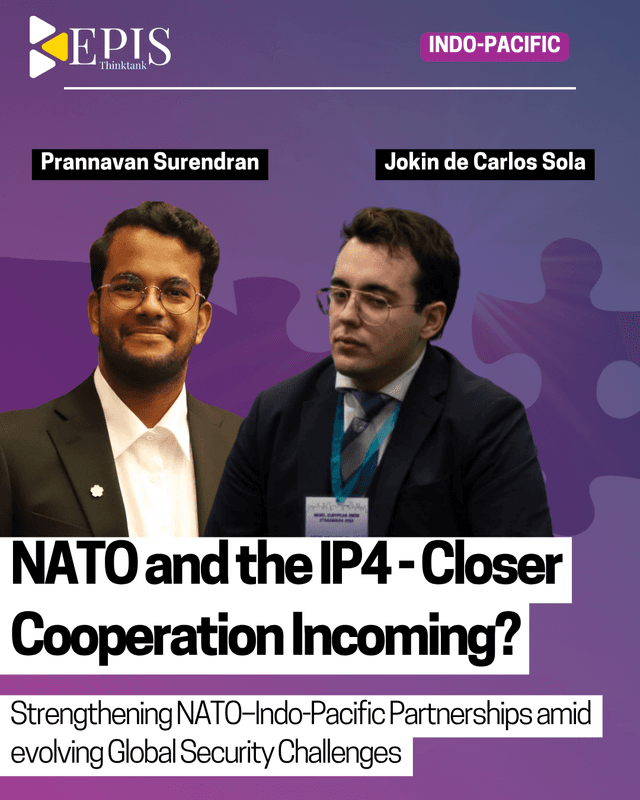
NATO and the IP4 – Closer Cooperation Incoming?
Main question: How and to what extent is cooperation between NATO and the Indo-Pacific Four evolving? Argument: Cooperation is deepening across political, military, and industrial domains, but remains selective and shaped by differing national priorities. Conclusion: NATO’s Indo-Pacific role is b…
Regionalising Maritime Domain Awareness in SEA
– what are the challenges inhibiting a comprehensive MDA strategy in SEA? – On a technical and governance level, SEA states are uncoordinated – states should work towards building up information sharing capacity and trust rather than solely looking to external actors.
Philippine Energy Security: The 2026 Crisis
– How can the Philippines mitigate national security threats from “single-source” energy reliance and Maritime chokepoint disruptions? – The Philippines must pivot from a “passive importer” to a leader in Strategic Energy Alliances, integrating resource development into national defense and secur…

The Cost of Blindness
Prioritisation and fascination with the democratisation and economic development of Myanmar blinded the International Community from the genocidal human rights abuses faced by Rohingya Muslims. At a time when Myanmar was opening up to the world, actors feared challenging the newly arisen Aung San…
ME Instability & the US-China Power Balance
1: How does the escalation of instability in the Middle East affect the global balance of power between the U.S. and China, and what are the secondary implications for stability in the Indo-Pacific? 2: While the U.S. faces a “credibility gap” as a security provider, China acts as a “free rider,” …
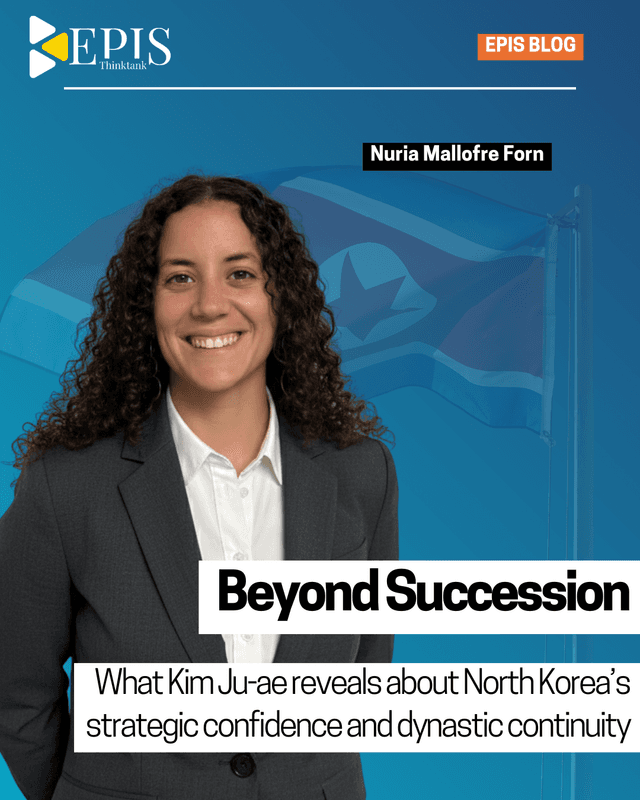
Beyond Succession
Main question: Do Kim Ju-ae’s appearances signal succession, or something broader about regime strategy? Argument: Her visibility is less about naming a successor than projecting dynastic continuity, strategic confidence, and strengthened legitimacy amid growing military power and ties with Russi…
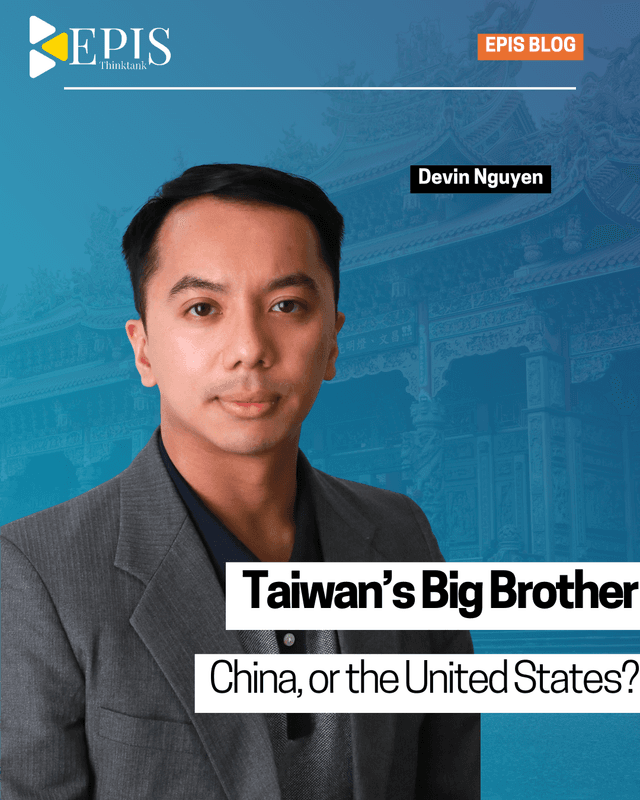
Taiwan’s Big Brother
Main question: Does Taiwan prefer partnership with the U.S. or China? Argument: Shifting opinions and geopolitics in East Asia affect Taiwan’s confidence and trust with the U.S. Conclusion: Taiwan still prefers U.S. partnership due to their decades’ long relationship.
Tianxia, All Under Heaven
– What is the Chinese concept of Tianxia? Can be useful in the international system? – Tianxia aimed to represent a civilised society governed by rituals, mutual benefit, and shared values, and it survives to this day in Chinese vision of international relations. – Tianxia can thus provide an int…
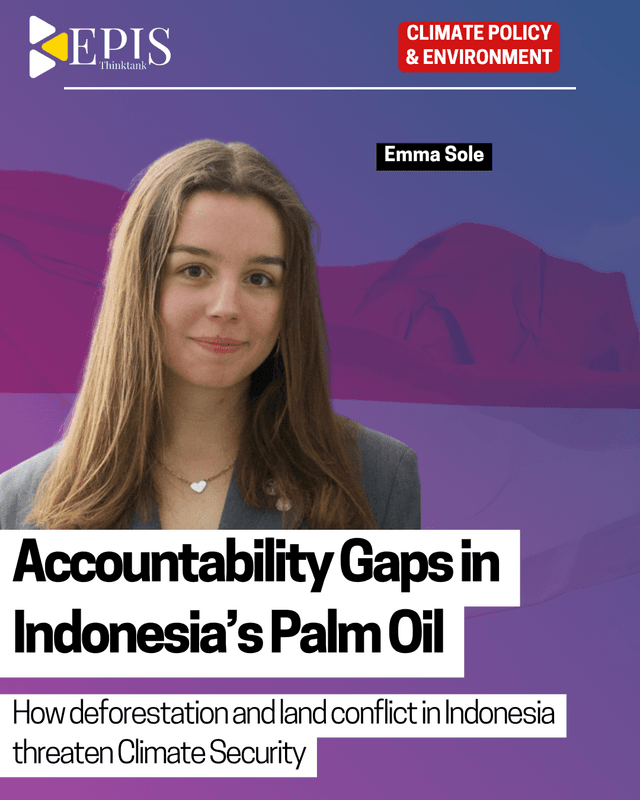
Accountability Gaps in Indonesia’s Palm Oil
How do governance failures and land conflicts in Indonesia’s palm oil sector contribute to broader climate security risks? Weak legal frameworks and export-driven growth enable corporate control and elite rent-seeking. As a result, land conflicts, labour exploitation, and environmental degradatio…
THE STRAIT OF HORMUZ AND THE INDO-PACIFIC
The US-Iran conflict that began on March 2, followed by the blockade of the Strait of Hormuz, affected the Indo-Pacific countries the most. As an important chokepoint through which more than 80% of crude oil and LNG passing through are bound for Asia, the Strait of Hormuz crisis affects every maj…
Reconciling Cambodia and Thailand
Have international legal regimes been effective in mediating the border conflict between Thailand and Cambodia? While each side pursues different international legal mechanisms, their differing incentives, goals, and national memories interfere with the peace process. In order to resolve the bord…
Beyond Formal Diplomatic Relations
Main question: How does Taiwan stay internationally present despite diplomatic isolation? Argument: It relies on strong informal economic, political, and security ties. Conclusion: These ties help Taiwan engage globally but cannot replace formal recognition.
Global South Korea
Main question: How does South Korea navigate through the current geopolitical landscape? Argument: Considering the fact that the country has a new administration since June 2025, South Korea has been “reseting” and “recalibrating” current relations with major international actors in 2026. Conclus…
Critical political ecology (CPE)
– The concept of critical political ecology highlights the link between the moral and practical concerns of the environmental movement and contemporary theories about the state, democracy, and justice. – Liberal democratic states are constrained in their ability to implement their green transitio…
When Aid Becomes a Weapon
1. Does the long-standing belief that independent, international agencies are best suited to deliver humanitarian assistance still hold today? 2. Aid approaches in Myanmar should emphasise locality rather than neutrality. 3. The presence of a repressive military junta and numerous insurgency grou…