

Europe
Biannual reports on EU foreign and security policy, enlargement dynamics, cohesion challenges, and intra-European political developments.
Published biannually · Peer-reviewed

Cyberattacks on EU Critical Infrastructure
Which EU critical infrastructure sectors face the greatest cyber risk, and which threat modalities are most active? The EU threat environment is bifurcated: high-volume DDoS/hacktivism pressures availability, while lower-volume intrusions cause high-consequence outcomes like ransomware and data t…
Resilient Roots: EU Tech Grants for Farmers
How can the EU accelerate climate tool adoption for smallholders in Africa and SE Asia without increasing financial risk? Loan-based models create debt burdens during crop failures; thus, a grant-based instrument within the NDICI-Global Europe framework is essential to fund both technology and lo…
Hybrid Security Regimes in Practice
Hybrid security regimes are deliberate political strategies that expand state influence through flexible, state-aligned networks rather than relying solely on formal institutions.

What Post-Brexit Britain Can Learn From the Past
Britain’s strategy has long relied on alliances, balancing Europe, and deterring Russia. Today, sustaining that approach requires adapting to new global realities and rebuilding domestic strength.
From Medicine to Military Tech
From Medicine to Military Tech A Founder’s Journey Himmel: Dr. Andres, you are a doctor, and now you sell optics and advocate for the idea that “defence is a human right.” How did that come about? Dr. Andres: Well, I didn’t start directly in the defence sector. During my studies, I had a PDA, som…
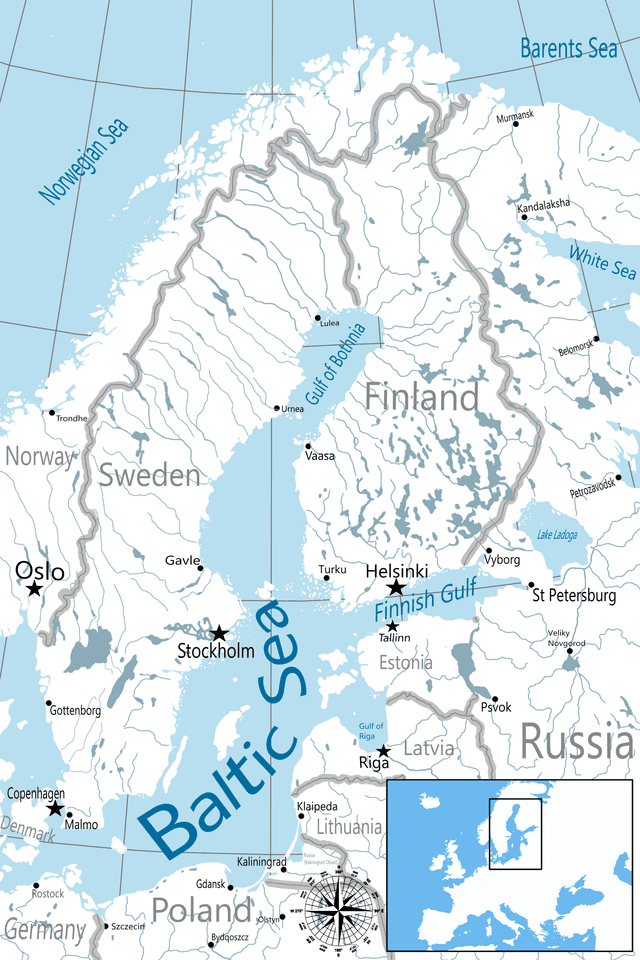
The Baltic Pivot
Facing Russian threats and Transatlantic rifts, Poland should make the Baltic Sea a pillar of its grand strategy: joining NB8 permanently, building a military partnership with Sweden, and reducing US arms reliance via cooperation with Sweden, Turkey and Ukraine, boosting deterrence and autonomy.
What to Buy in the Future?
What to Buy in the Future? Recalibrating European Defence Spending to Decrease Structural Dependencies Executive Summary Europe has increased the volume of its defence spending but remains structurally dependent on manufacturers under US jurisdiction. If Europe wants to become a somewhat sovereig…
Intelligence as part of European grand strategy
Intelligence as a part of European grand strategy: a feasible future on a larger scale? Introduction Intelligence agencies help policymakers implement the grand strategy they pursue (Rovner, 2021). They play an important role in monitoring international security, which in turn informs decision-ma…
Reconfiguring Europe’s Forward Presence:
NATO’s Eastern Flank posture shifted from tripwire to forward defence, but a US withdrawal strains credibility. Facing Russian threats, Europe must build autonomous heavy-force deployment and logistics, using coalitions like JEF or MNC-Ukraine to offset reduced US support.
A doctrine before a strategy
A doctrine before a strategy: Building the preconditions of European grand strategic reasoning The European Union confronts acute geopolitical pressure with strategic documents whose vocabulary outruns their substance. I argue that the EU’s three strategic documents — the 2003 European Security S…
Investing in Security
Investing in Security: How EU Fiscal Rules Undermine European Strategic Autonomy – and What to Do About It By Patryk Borowski Introduction Europe has been caught unprepared by strategic shocks twice in recent memory – by the return of large-scale conventional war in 2022, and by the energy-depend…
Investment Arbitration’s New Architecture
Investment Arbitration’s New Architecture How UNCITRAL and ICSID reforms are reshaping investor–State dispute settlement The reform of investor–State dispute settlement (ISDS) is in a structural phase. Since 2017, the United Nations Commission on International Trade Law (UNCITRAL) Working Group I…
From Sovereignty to Sustainability
From Sovereignty to Sustainability: Natural Resources and Investment Protection in International Economic Law Natural resources represent a cornerstone of international economic relations. This relevance relies, on the one hand, on the fact that states depend on them as drivers of development and…
Strategic non-nuclear weapons and the NPT
Strategic non-nuclear weapons and the NPT: Revisiting the binary distinction of Article IX(3) The emergence of strategic non-nuclear weapons (SNNW) has blurred the line between conventional and nuclear warfare, necessitating a re-evaluation of how states are classified in global arms control regi…
Legal Coalitions in a Multipolar World
Legal Coalitions in a Multipolar World How the EU can defend, repair and extend rules in a contested global order by Maximilian Schlenker By early 2026, the European Union had begun to speak in a new tone. Ursula von der Leyen told EU ambassadors that Europe needed to revisit its doctrine, instit…

Rise of the Rest
Amid geopolitical uncertainty, this article explores how Ireland can leverage its strong relationship with the US to promote democratic values internationally. It argues that small states are not passive actors but influential partners capable of shaping global affairs through strategic diplomacy.

The Global Disorder Cycle
This article asks whether history follows recurring cycles of recession and expansion or unfolds by chance. It argues that downturns reflect a persistent cyclical pattern rather than isolated events, concluding that while these cycles evolve, their underlying logic remains constant.

From fragmentation to flexibility
How can the EU design digital infrastructure ensuring both security and civil rights for times of peace and crisis? The answer lies in resilience by design, through frameworks like the EUDI Wallet, NIS2 Directive, and the IEA, which create distributed, interoperable system. This proactive archite…
The Euro as an international currency
– Should the ECB push the Euro internationally to incentivise smaller economies to take the Euro on as their anchor currency? – The general trend point towards a de-risking internationally with countries increasingly preferring baskets over a single currency, and the most attractive policy remain…
Who Controls Money?
How do cryptocurrencies affect financial stability and security compared to gold? Both rely on scarcity but differ in relation to state power. Gold is embedded in state systems and supports stability, while cryptocurrencies enable decentralized transfers outside institutions. This weakens sanctio…