

Climate & Security Nexus
/Read the full issueBigger Without Losing Better
Main question: How can the EU achieve enlargement without letting budget redistribution strains create disruptive domestic political deadlocks? Argument: The EU must implement a formalized rule of limited fiscal impact containing a double threshold on national gross national income shifts. Conclu…
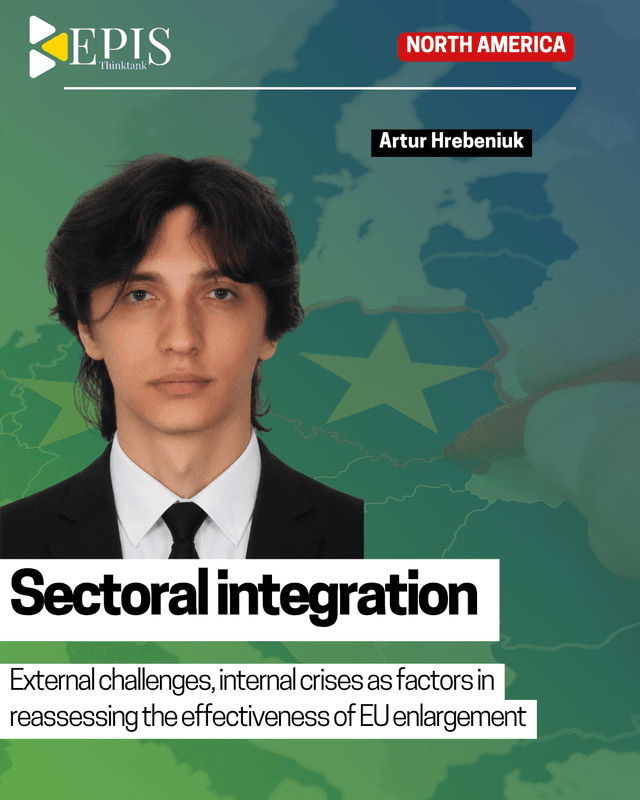
Sectoral integration
Main question: How can the EU resolve the structural contradiction between the geopolitical need for expansion and the internal limitations slowing down linear enlargement? Argument: The EU must replace its rigid membership model with a phased, modular framework of sectoral integration alongside …
Interview with Former Minister of Defence Fasslabend
Former Austrian Defence Minister Fasslabend discusses Austria’s evolving role in European defence and security, advocating for greater European self-reliance in regional stability. He underscores Austria’s unique position, shaped by neutrality and close ties to Central and Eastern Europe, emphasi…

The Muslim Brotherhood as Hybrid Actor
How does the Muslim Brotherhood challenge Western stability? This article highlights the Brotherhood’s hybrid tactics, using social, political, and technological means to promote its Islamist agenda in Western societies. Through extensive networks in Europe, it operates within legal frameworks wh…

Short Term Protection, Long Term Struggles
Can the European Union sustain long-term support for Ukrainian refugees? While the Temporary Protection Directive (TPD) offered swift relief, its temporary nature raises concerns for prolonged crises. This article examines the TPD’s limitations and explores the need for sustainable alternatives, …

Arctic Exceptionalism
How can the Arctic maintain cooperation amid rising global tensions? Initially envisioned as a peaceful zone, the Arctic now faces growing geopolitical competition as climate change and resource accessibility attract major powers like Russia, the United States, and China. Despite these pressures,…

Proliferation of Satellite Mega-Constellations
What does the rise of satellite mega-constellations mean for Europe’s strategic autonomy? As the space industry shifts to commercial dominance, mega-constellations like Starlink offer global connectivity but also pose strategic risks. This article explores how Europe’s dependence on non-EU satell…

Artificial Intelligence & Aggressive Intentions
Can AI reshape the future of warfare and deterrence? This article explores how advancements in AI and autonomous weapons are transforming military strategy and state power dynamics. As weapons systems grow more independent, states are redefining deterrence strategies to maintain security in a rap…

Sweden’s Historic Shift
What does Sweden’s NATO membership mean for its national defence? This article examines Sweden’s transition from neutrality to active alliance participation, focusing on how it strengthens regional security in the Baltic and High North. With strategic assets like Gotland and a robust defence indu…

Sovereignty in Cyberspace
Is an international consensus on cyber-sovereignty possible? As cyber-attacks surge globally, the urgency for defining state sovereignty in cyberspace has intensified. This article explores the difficulties of regulating this domain, addressing issues like anonymity, the rapid pace of technologic…

Miscalculation at Machine Speed?
Advanced AI and Machine Learning systems could challenge the nuclear balance of power by undermining mutually assured destruction.

Stoltenberg Out, Rutte In
What can be expected from Mark Rutte as NATO’s new Secretary General? This article examines Rutte’s thirteen years as Dutch prime minister, marked by crisis management and coalition-building, qualities now essential for NATO. With tensions escalating from Russia, China, and within NATO itself, Ru…
EPIS Basics: Looking at the Concept of Neutrality
This article explores the concept of neutrality and five distinctions within the multifacted concept. It provides a clearer understanding of how neutrality functions in international affairs.