

Conflict & Diplomacy
/Read the full issue
EU Enlargement Revisited
Main question: How can the EU balance strategic geopolitical expansion with strict merit-based compliance to ensure sustainable integration? Argument: The EU should adopt a phased integration model and depoliticise accession criteria to prevent external delays. Conclusion: Despite short-term econ…
Key Findings on Ukraine: Key Reform Roadmap
Main question: How can Ukraine sustain its EU accession momentum and provisionally close its negotiations by the end of 2028 despite ongoing conflict? Argument: Ukraine must accelerate its reform pace in fundamental principles, specifically the rule of law, while utilizing interim EU integration …
A Union that Scales
Main question: How can the EU adapt its traditional, binary enlargement process to expand geopolitically without falling into decision-making paralysis or democratic backsliding? Argument: The EU must implement a “Triple-Track Strategy” that unbundles integration into phased market access, politi…
Building a Resilient Europe
Main question: How can the EU evolve its enlargement framework from a slow political process into a security-driven integration model that actively incorporates wartime innovation? Argument: Integrating the defence, civil protection, and preparedness systems of member states and candidate countri…
European Integration and EU External Action
Main question: How does legal fragmentation across EU external action frameworks—security, human rights, economic policy, and digital governance—affect its capacity to act as a unified global actor? Argument: Structural fragmentation and intergovernmental dominance create legal uncertainty, weake…
Implications of the EU’s Nearshoring Activities in Morocco
Amidst the global power shifts and disruptions of supply chains, the European Union will need a new strategy to secure its position in the world and enhance the resilience of the domestic market. This paper explores how a new initiative of nearshoring EU’s global production lines closer to its bo…
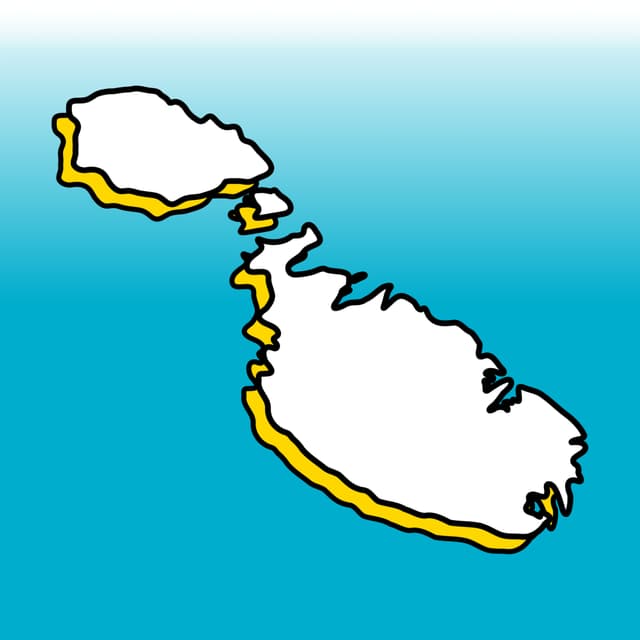
Multilaterism = Maltaleralism
When you think of international conflicts, small nations are often overlooked. But they also play a significant role in resolving the conflict. In an interview with the Maltese ambassador, we explore the silent diplomacy of small states.

Shifting Priorities
Civil-military cooperation involves military forces working with civilian entities and populations to achieve shared goals in conflict, disaster, or peacetime. However, the concept is debated among scholars, with varying definitions, depending on who defines it. Nevertheless, civil-military coope…
EPIS Basics: the US Grand Strategy Spectrum
America has the luxury of choosing along a spectrum of four broad grand strategy choices: isolationism, offshore balancing, selective engagement, and hegemony.
What will Biological Warfare look like in the 21st Century
From the perspective of a natural scientist, how will today’s technology change biological warfare in the 21st century? Over the last two decades, breakthroughs in synthetic biology, biological engineering and biological AI have radically changed what is possible in terms of biological weapons re…

Flowing Into Uncertainty
Is water security in Asia at a tipping point? Highlighting hydrological, socio-economic, and climate change factors, the article examines water scarcity’s impact on geopolitical stability in Asia, using case studies from India, Pakistan, and China. Emphasis is placed on sustainable water manageme…

The European Army
The European Army regularly appears in European defence discourse as a solution that would solve the troubles that the EU has had in it´s defence sector. This article aims to discuss the challenges that a European army would create and aims to answer the question if the idea of a European Army wo…
The Time has Come to “Europeanise” NATO
The relationship between the United States (US) and the North Atlantic Treaty Organisation (NATO) is often fantasised about by Europeans, who are quick to confound US defence with NATO. However, we should consider NATO in the same way as the Americans – a European regional organisation in which t…

Reverberations of Resistance
This article explores the Western influence in Asia and the Middle East, focusing on the Vietnam War’s impact on governmental responses to protests in the U.S. and Western Europe. By examining the protests’ intensity and government actions, the paper investigates the reciprocal relationship betwe…

The Role of AI in Supporting Women, Peace and Security Agenda
This article investigates how artificial intelligence (AI) technologies can support the Women, Peace, and Security Agenda (WPS). Through the introduction of the following technologies: automated behavioural analysis, AI consultation, predictive analytics, AI-generated event maps and machine-learn…
Facing Russia’s War Economy
Russia’s war economy has defied initial predictions of collapse following Western sanctions. Instead, Russia’s GDP has grown, and its military spending has increased to 6% of GDP. However, the economy faces challenges, including human capital flight, reliance on fluctuating energy prices, and pos…

Migration is International and so Should Response Efforts
Sweden, historically an emigrant nation, has become a significant migrant destination, with 20% of its population born abroad. The influx, particularly from the Middle East, has fueled support for the far-right Swedish Democrats. Meanwhile, Jordan, with a refugee population comprising 33% of its …