

Democracy & Governance
/Read the full issue
Resilient Roots: EU Tech Grants for Farmers
How can the EU accelerate climate tool adoption for smallholders in Africa and SE Asia without increasing financial risk? Loan-based models create debt burdens during crop failures; thus, a grant-based instrument within the NDICI-Global Europe framework is essential to fund both technology and lo…
Limited Statehood
Limited Statehood: How Armed Groups Fill Governance Gaps in Sub-Saharan Africa When state authority is weak or absent, armed groups may seize the opportunity not only to fight national authorities, but also to create rules, tax civilians, regulate behaviour, impose their own concept of justice, a…

What It Takes to Build Peace Today
In this guest contribution, Chris Coulter, Executive Director of the Berghof Foundation, examines how we can move beyond short-term deterrence to build lasting peace through local ownership, impartiality, women’s meaningful participation, societal trust, and adaptive mediation.
Hydro-Hegemony: Türkiye’s Leverage over Syria Iraq
How does Türkiye’s Southeastern Anatolia Project (GAP) transform upstream water control into geoeconomic leverage over Syria and Iraq? This article argues that expanded hydropower and irrigation infrastructure convert hydrological dominance into domestic economic gains, producing asymmetric inter…
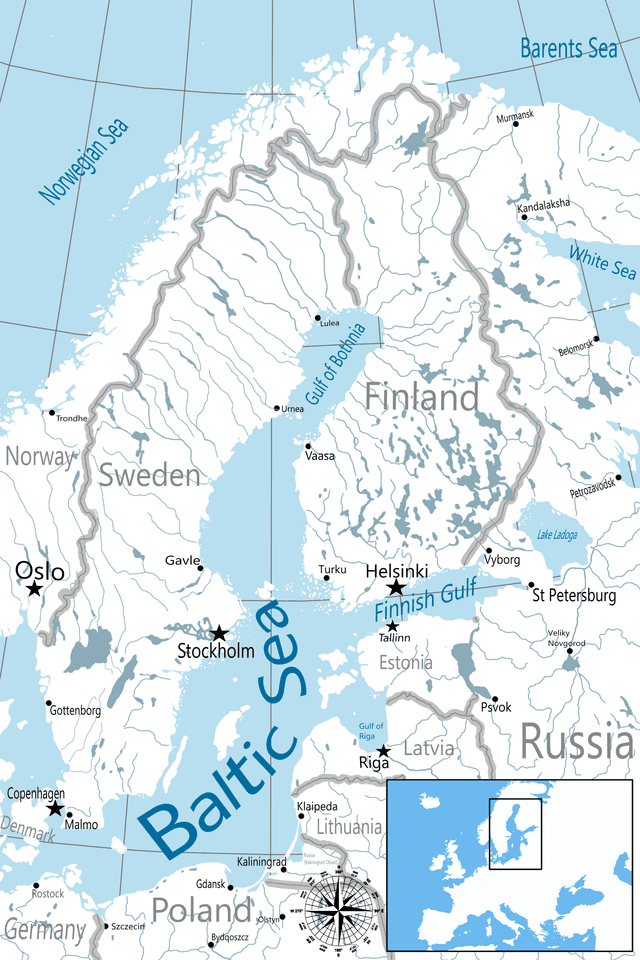
The Baltic Pivot
Facing Russian threats and Transatlantic rifts, Poland should make the Baltic Sea a pillar of its grand strategy: joining NB8 permanently, building a military partnership with Sweden, and reducing US arms reliance via cooperation with Sweden, Turkey and Ukraine, boosting deterrence and autonomy.
What to Buy in the Future?
What to Buy in the Future? Recalibrating European Defence Spending to Decrease Structural Dependencies Executive Summary Europe has increased the volume of its defence spending but remains structurally dependent on manufacturers under US jurisdiction. If Europe wants to become a somewhat sovereig…
Intelligence as part of European grand strategy
Intelligence as a part of European grand strategy: a feasible future on a larger scale? Introduction Intelligence agencies help policymakers implement the grand strategy they pursue (Rovner, 2021). They play an important role in monitoring international security, which in turn informs decision-ma…
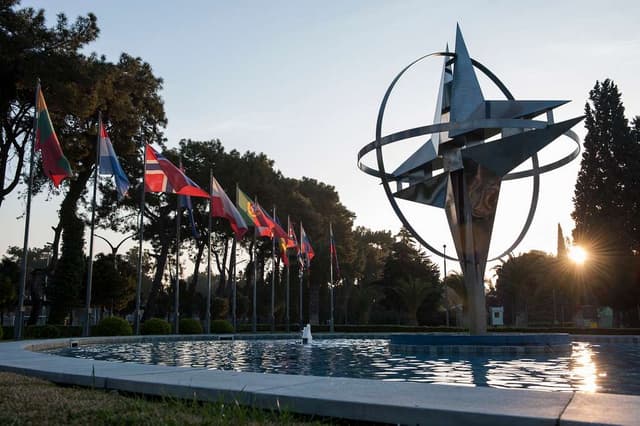
Reconfiguring Europe’s Forward Presence:
NATO’s Eastern Flank posture shifted from tripwire to forward defence, but a US withdrawal strains credibility. Facing Russian threats, Europe must build autonomous heavy-force deployment and logistics, using coalitions like JEF or MNC-Ukraine to offset reduced US support.
A doctrine before a strategy
A doctrine before a strategy: Building the preconditions of European grand strategic reasoning The European Union confronts acute geopolitical pressure with strategic documents whose vocabulary outruns their substance. I argue that the EU’s three strategic documents — the 2003 European Security S…
Investing in Security
Investing in Security: How EU Fiscal Rules Undermine European Strategic Autonomy – and What to Do About It By Patryk Borowski Introduction Europe has been caught unprepared by strategic shocks twice in recent memory – by the return of large-scale conventional war in 2022, and by the energy-depend…
Rethinking the EU’s Expansion Dilemmas
Main question: How can the EU pursue geopolitically necessary enlargement without weakening its internal cohesion and governance capacity? Argument: The EU must implement a phased “European Political Sphere” framework alongside extending Qualified Majority Voting to prevent single-state vetoes. C…
Progressive EU Accession Path for Ukraine
Main question: How can the EU offer Ukraine meaningful integration benefits during a long pre-accession period without resorting to a politically accelerated membership that compromises standards? Argument: The EU should establish a “Progressive Accession” status, providing graduated Single Marke…
A Sectoral Roadmap to EU Integration
Main question: How can the EU advance cooperation and prevent loss of influence in Georgia, given structural incompatibility, political ambiguity, and dependence on Russia? Argument: The EU should apply gradual sectoral integration, prioritising energy independence, cultural networking, and regu…
Strategic Association Treaty (SAT)
Main question: How can the EU enhance its strategic autonomy and competitiveness without causing internal deadlock through full membership expansion? Argument: The EU should adopt the Strategic Association Treaty (SAT), a pragmatic, hybrid framework enabling sector-specific integration with key e…
Strait of Hormuz
This essay aims to highlight the impact of the current blockade of the Strait of Hormuz on the EU, how it is managing, relatively, the crisis effectively, and what this entails for its strategic (energy) autonomy plans.
Critical political ecology (CPE)
– The concept of critical political ecology highlights the link between the moral and practical concerns of the environmental movement and contemporary theories about the state, democracy, and justice. – Liberal democratic states are constrained in their ability to implement their green transitio…
Policy Incompatibility in the European Union
Do the monetary costs expected to be saved by businesses through simplification initiatives outweigh the possibly detrimental costs for environmental regulation? The shifting of the Commission’s priorities is reflected in the policy overlap of the omnibus package on sustainability and the compreh…
Water as an Instrument of War
Should the environment be used as an instrument of war ?
Stop Further Schengenigans
New EU members shouldn’t agree to the same Schengen Accession rules that Romania and Bulgaria signed. It’s better for democracy.
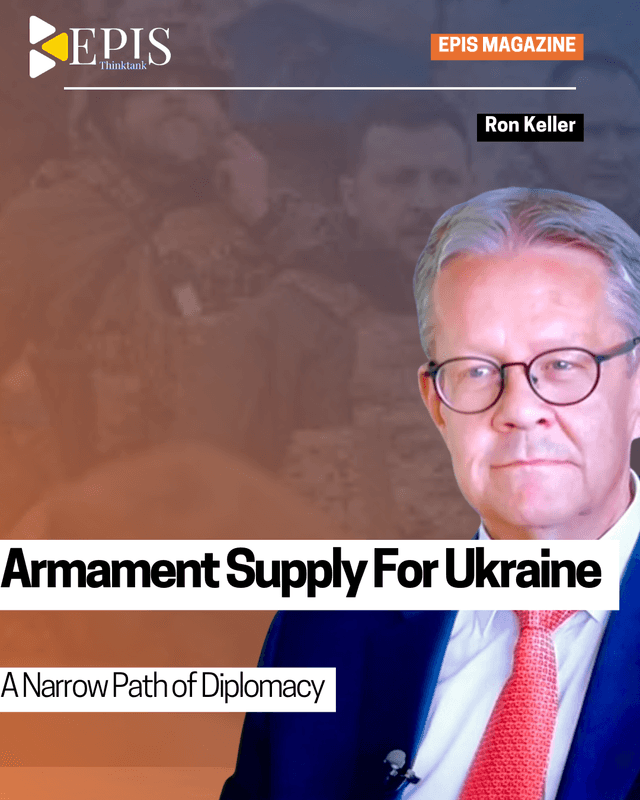
Armament Supply For Ukraine
Whether Ukraine is supported by arms deliveries or whether this only prolongs a devastating war is a difficult question. Diplomacy does not seem to be able to provide an answer to this. Diplomatic channels – also in connection with arms policy – are essential for Europe and the world.