

European Defence
/Read the full issue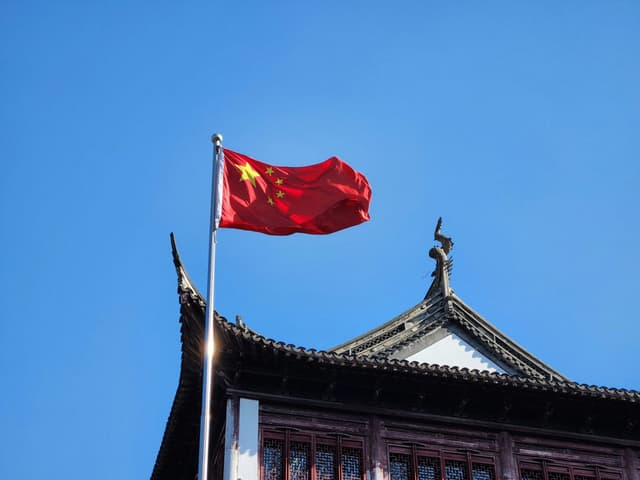
China’s Reactions to US Belligerence under Trump
How has China responded to recent U.S. actions in Greenland, Venezuela, and Iran? This article argues that rather than expanding through coercion, China has sought to project itself as a defender of diplomacy and peace, despite the opportunities created by global instability.

Cyberattacks on EU Critical Infrastructure
Which EU critical infrastructure sectors face the greatest cyber risk, and which threat modalities are most active? The EU threat environment is bifurcated: high-volume DDoS/hacktivism pressures availability, while lower-volume intrusions cause high-consequence outcomes like ransomware and data t…

Hybrid Security Regimes in Practice
Hybrid security regimes are deliberate political strategies that expand state influence through flexible, state-aligned networks rather than relying solely on formal institutions.

The IDSF on security challenges in the Middle East
According to IDSF, Israel’s security relies on national resilience, technological innovation, and regional partnerships, while deradicalization remains essential for long-term Middle East stability.
From Medicine to Military Tech
From Medicine to Military Tech A Founder’s Journey Himmel: Dr. Andres, you are a doctor, and now you sell optics and advocate for the idea that “defence is a human right.” How did that come about? Dr. Andres: Well, I didn’t start directly in the defence sector. During my studies, I had a PDA, som…

Bridging the Gap
1. The interview explores why transatlantic security often overlooks local and state leaders. 2. Joshua Burgin argues that strong personal networks between local leaders are essential for effective security cooperation. 3. The article concludes that stronger local-level transatlantic ties improve…
EU Enlargement and EP Seat Allocation Reform
Main question: How can the EU reform seat allocation in the European Parliament to integrate new candidate states without breaking the 750-mandate cap or causing political imbalance? Argument: The EU should implement a transparent formula combining a base quota, demographic sizing, and GDP per ca…
Iceland’s Path to EU Membership
Main question: How can Iceland and the EU structure an enlargement framework that reconciles economic sovereignty concerns with shifting Arctic security realities? Argument: The EU and Iceland should implement a coordinated five-step accession package spanning fisheries, energy, agriculture, defe…
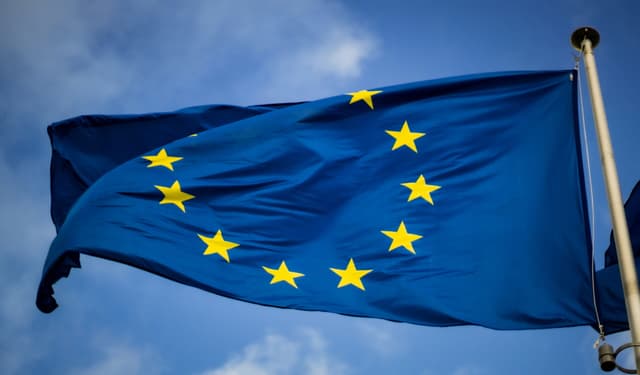
Rethinking Enlargement for a New Age of the EU
The article argues that the EU should adopt a dual-track enlargement model, enabling candidate states to join sector-specific policies before full membership while preserving constitutional safeguards.
Constitutional Identity in EU Membership
Main question: How can the EU ensure candidate states align with its core values when accession mainly measures legislative compliance rather than constitutional culture? Argument: The EU should introduce a Constitutional Identity Convergence Assessment (CICA) to evaluate candidates’ highest cour…

What is Anarchy and can we overcome it?
[EPIS Basic Contribution]
The Mutual Industrial Resilience Program
How can the EU overcome structural vulnerabilities while reforming its slow, politically driven enlargement? The EU must deploy the €30B Industrial Resilience Facility and an EIB-backed 70% political risk insurance mechanism to embed candidates into European energy, technology, and manufacturing …
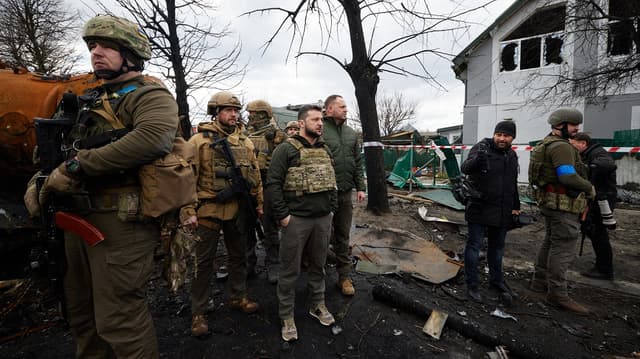
Policy Paper: The Cost of Unpredictability
Main question: how can policymakers address and navigate current geopolitical situation? Argument: Due to the absence of a central authority in the international system, states must rely on self-help. Conclusion: Policymakers should therefore adopt a hedging strategy by diversifying sector-specif…

Rise of the Rest
Amid geopolitical uncertainty, this article explores how Ireland can leverage its strong relationship with the US to promote democratic values internationally. It argues that small states are not passive actors but influential partners capable of shaping global affairs through strategic diplomacy.

The Global Disorder Cycle
This article asks whether history follows recurring cycles of recession and expansion or unfolds by chance. It argues that downturns reflect a persistent cyclical pattern rather than isolated events, concluding that while these cycles evolve, their underlying logic remains constant.
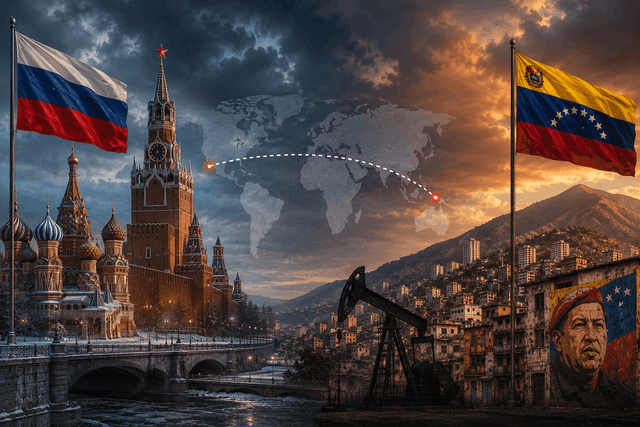
From Moscow to Caracas
In an era of rapidly developing social media, cyber threats such as manipulation, fake news, and disinformation are also expanding as elements of planned psychological and information campaigns—tools of hybrid warfare used to build influence and sustain autocratic power. The article describes coo…
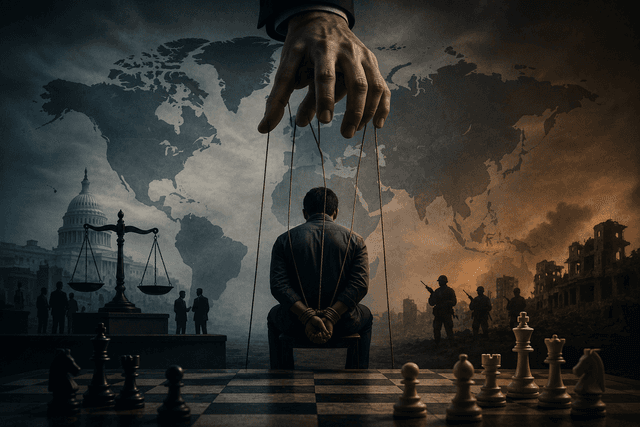
Hostage Diplomacy
Why are foreign nationals increasingly used as leverage rather than prosecuted? This article argues that hostage diplomacy persists because it yields strategic gains, making human vulnerability a recurring tool of negotiation in an increasingly fragmented international system.
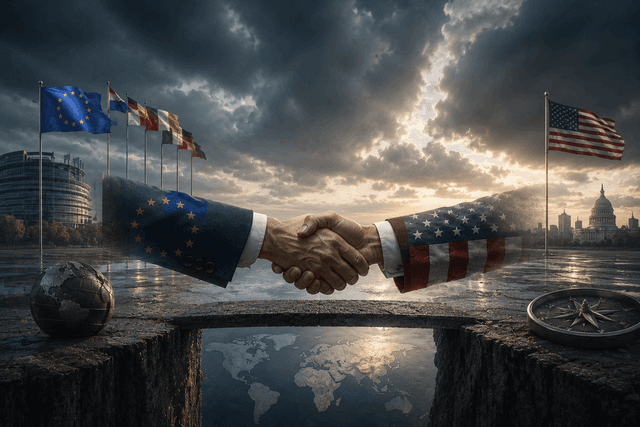
Allies in Uncertain Times
How did the EU respond to Trump-era uncertainty in U.S. foreign policy? Rather than abandoning the transatlantic alliance, it diversified its partnerships and pursued limited strategic autonomy while maintaining close cooperation with the United States.

Making Greenland and Venezuela Great Again
Does Trump’s approach to Venezuela and Greenland reflect modern imperialism? This article argues that his policies display elements of economic and strategic imperialism, but concludes that differing definitions and competing factors make a definitive judgment difficult.
The Future of the Petrodollar
Main question: How might the energy transition affect the role and underlying strengths of the USD as the world’s reserve currency. Argument: one of the main pillars of USD dominance in global reserves is the ‘petrodollar’ system in which oil sales are denominated in dollars, requiring central ba…