
No degree yet · Leiden University
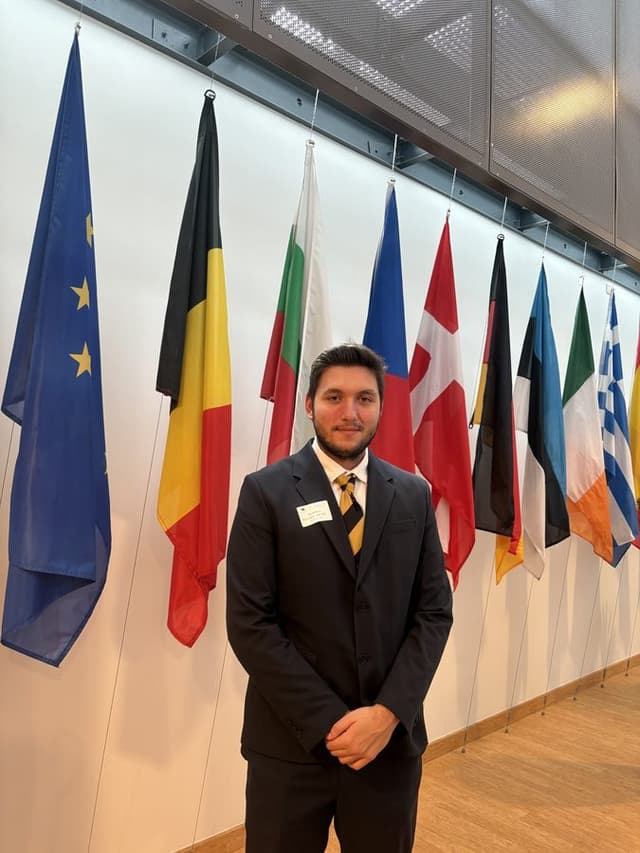
Burak Baran is studying Political Science specialising in International Relations and Organisations at Leiden University Campus The Hague. He is a member of the Board of Directors responsible for social media and Human Rights and Humanitarian Aid Report Group at EPIS Think Tank. He used to be a regular contributor at the European Relations Association. He also worked for UNICEF Team at Leiden, fundraising for the Madagascar Project. His research focuses on Middle Eastern region and human rights.
Main question: How can the EU pursue geopolitically necessary enlargement without weakening its internal cohesion and governance capacity? Argument: The EU must implement a phased “European Political Sphere” framework alongside extending Qualified Majority Voting to prevent single-state vetoes. C…
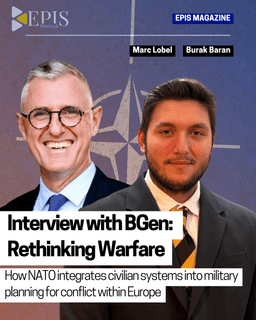
War has shifted to inside of Europe, taking place within civilian populations, infrastructure, and networks threatening the whole continent. Military success depends on civilian systems like energy, transport, and private sector logistics NATO integrates civilian and military planning to anticip…
Was WEF26 equipped to address peace given the complex geopolitical structures and tension around Greenland? WEF26 was effective in terms of dialogue and de-escalation, but structurally not capable of enforcing and ensuring peace Davos can be a tool to talk about peace, but it can’t guarantee it.
– Was international aid provided after the Turkish–Syrian earthquake used appropriately? – Despite substantial funding, centralised administration in Turkey and authoritarian control in Syria led to political interference, weak oversight, and selective allocation, limiting effective distribution…
1. Is China changing the balance of power in the Middle East to a multipolar order? 2. China isn’t just about trade anymore — it’s stepping into security. From brokering deals to selling arms and joining military drills, China is quietly building real influence. 3. The Middle East is no longer ju…
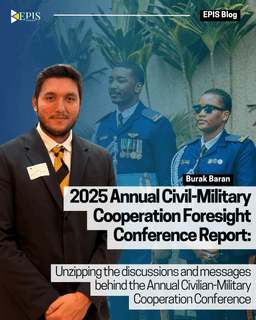
– How can CIMIC adapt to modern unconventional methods like humanitarian crises, political instability and evolving security threats. – CIMIC should evolve by taking in account both civilian and military opinions and integrating new doctrines. – Adaptation is urgent. CIMIC must act as a bridge be…